



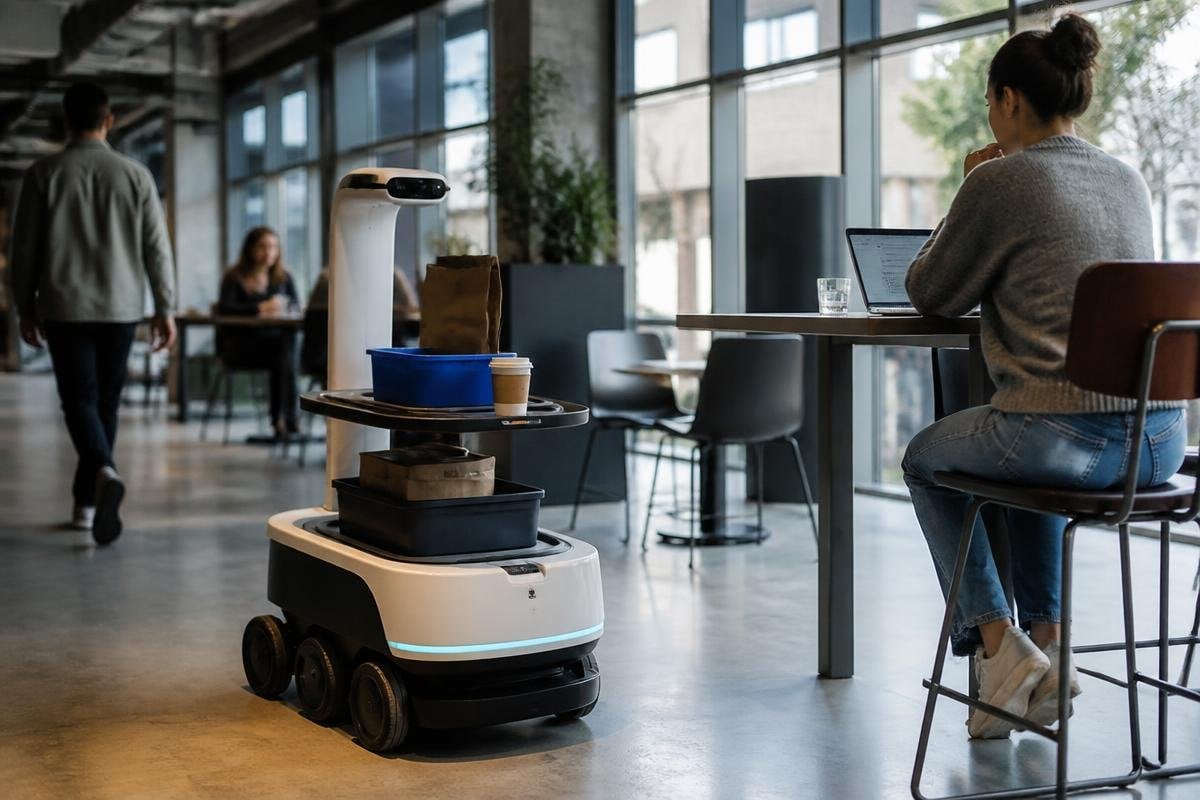
A robot can now sense a person, choose a path, move an object, and record what happened. That puts ethical questions beside the hardware: who sets the rules, who checks the result, and who pays when the system causes harm?
- Safety choices can affect people who never agreed to use the robot.
- Data from cameras and sensors can expose workers, customers, or patients.
- A human override matters only if a person can reach it in time.
Robots make decisions in public
Older industrial robots usually worked inside marked areas, behind guards, with trained staff nearby. Many newer systems move through shared spaces, such as warehouses, hospitals, roads, and homes. Their software must sort people, objects, obstacles, and instructions while the work continues.
That changes the ethical question. A robot may stop when a person enters its path, slow down near a fragile object, or refuse a command that breaks its safety rules. Each choice affects someone. The rule may be hidden in software, but the result is physical.
Autonomy means the robot can act without a person giving every command. It doesn’t mean the robot understands right and wrong. It follows goals, limits, sensor readings, and training data set by people.
Safety needs more than a stop button
A stop button remains useful, but it only helps when a person can see the risk and reach the control. A delivery robot on a pavement, a mobile robot in a hospital, and a robot arm beside a worker face different hazards.
The safe design starts with the task. Engineers need to set speed limits, define restricted areas, test sensor failures, and decide what the robot should do when its data conflicts. The system also needs a clear handoff to a person when it cannot judge the situation well.
That handoff has a human cost. If staff must watch several robots at once, the person may have too little time to act. A safety plan that depends on constant attention needs to state who is watching, what they can see, and how fast they can stop the machine.
Data changes the privacy question
Robots often need cameras, microphones, location data, or records of human movement. A cleaning robot may map rooms. A warehouse robot may record worker positions. A care robot may handle information about a patient.
The useful question is narrower than “does the robot collect data?” Ask what data the task needs, where it stays, who can access it, and when the system deletes it. A camera feed kept for safety review creates a different risk from a feed kept for general monitoring.
Data rules only matter if a real deployment follows them. Robot24.com reports can place sensor access, storage periods, and deletion rules beside the robots using them. That detail gives the privacy policy a test: does the person in front of the robot know what gets recorded?
Clear signs also matter. People should know when a robot is recording them, what the recording does, and which person or company controls it. Privacy rules written after deployment leave workers and customers to discover the system through trial and error.
Responsibility cannot stop at the software team
A robot may be built by one company, sold by another, and operated by a third. The site owner may change its task after installation. That chain can make blame unclear when a system causes an injury, damages property, or makes a wrong decision.
Each stage needs a named duty. The maker should explain limits and failure modes. The buyer should set safe operating rules. The operator should report faults and keep training current. A manager should have a record of who approved the task and who can stop it.
Logs help with that work. A useful log can show the robot’s location, sensor state, command, warning, and human response. It won’t prevent every failure, but it can show what the system saw and what people did next.
I think robot ethics becomes useful when it reaches the work order, the risk review, and the service contract, rather than staying in a policy document.
A practical ethics check before deployment
Use these questions before a robot starts work around people:
- Define the task: state what the robot may do and where its authority ends.
- Name the owner: assign one person to approve changes and review incidents.
- Check the data: record each sensor, its purpose, access rules, and deletion time.
- Test failure: remove a sensor, block a route, and interrupt the network.
- Set human control: show who can stop the robot and how quickly they can act.
- Review the record: inspect logs after tests, near misses, and changes to the task.
These checks also give buyers something concrete to ask vendors. A product sheet can list payload, speed, and battery life. It should also explain its limits, logs, update process, and response when the system cannot complete a task safely.
The next stage of robot ethics will be measured in those details: who can stop the machine, what data it keeps, and which name appears beside the decision when something goes wrong.
