



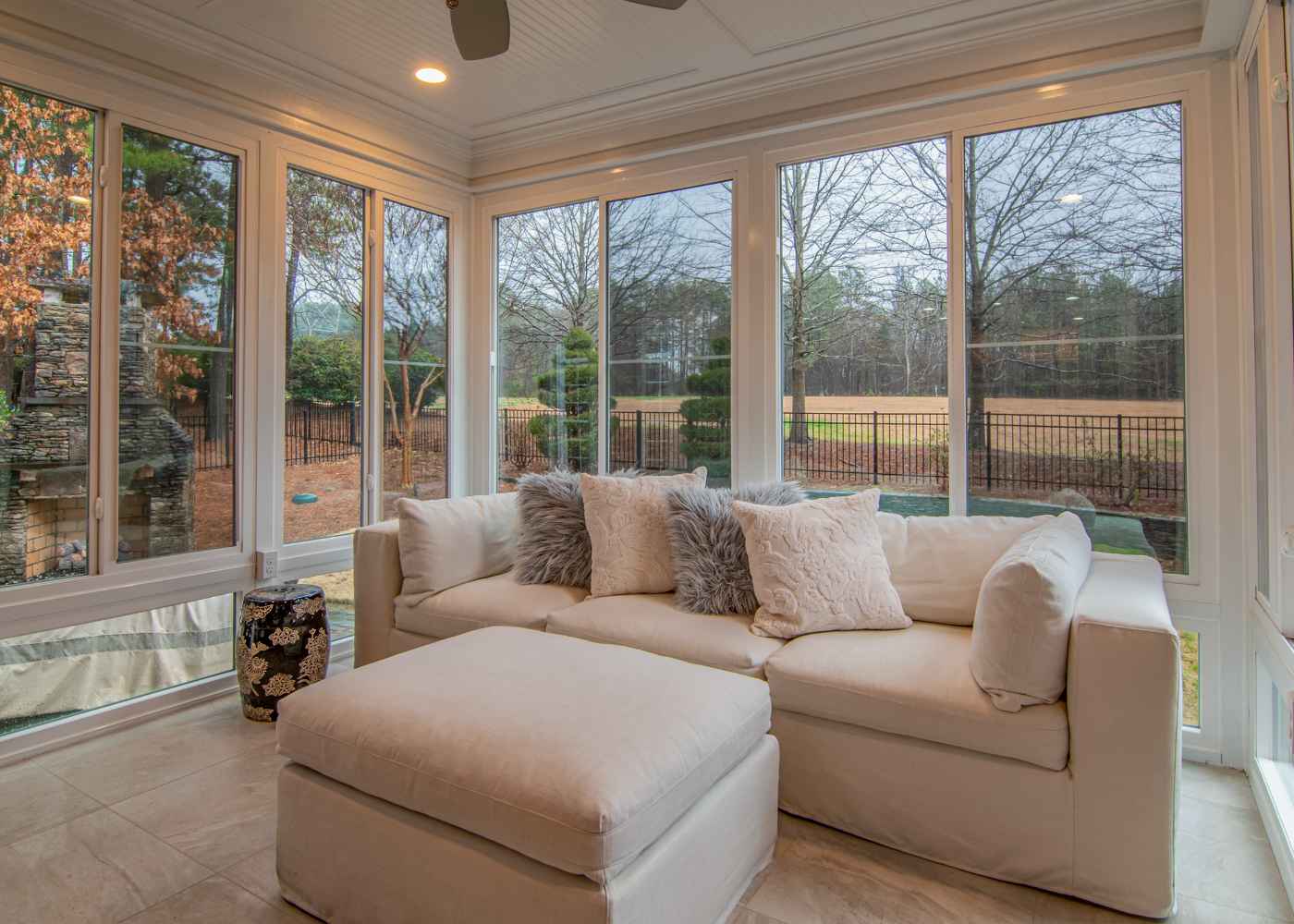
Walk past an old window on an August afternoon in Oklahoma and you can feel the heat coming through it. Stand near that same window in January and the cold does the same thing in reverse.
That sensation is not imagination. It is money leaving the house, and it happens every hour of every day whether anyone is paying attention or not.
Understanding Where the Energy Goes
Windows are the weakest point in the thermal envelope of most homes, and it is not close.
Heat moves through them in more than one way. It conducts straight through the glass and the frame, it radiates in as sunlight striking the interior, and it leaks around a frame that no longer seals the way it did when it was new.
An older single-pane window offers almost nothing against any of that. Your cooling system does not fail on a hot afternoon so much as it competes with the walls of glass around it, running longer and longer to hold a temperature it should reach easily.
Locking the Conditioned Air Inside
Modern window construction attacks each of those paths deliberately.
Insulated glass places two or more panes with a sealed space between them, and that space does the insulating. Filling it with an inert gas slows heat transfer further, since the gas conducts less readily than plain air does.
Low-emissivity coatings handle the radiant side. A microscopically thin layer on the glass reflects heat energy while letting visible light through, which means the room stays bright without the sun loading the space with heat all afternoon.
The frame matters as much as the glass. Aluminum conducts heat readily, so a thermal barrier separating the interior and exterior portions of the frame prevents the frame itself from becoming a shortcut around all that insulated glass. Vinyl construction addresses the same problem differently.
None of these features works alone. The glass, the gas fill, the coating, and the frame have to be engineered together, which is why a window is best judged as a complete assembly rather than by any single specification on a label.
Choosing Windows Built for This Climate
Oklahoma asks a great deal of a window. Scorching summers, genuine cold, wind, and the occasional hailstorm all test an installation in different directions.
Windows engineered for a mild coastal climate will underperform here, which is why regional manufacturing matters more than buyers expect. Companies such as Thermal Windows, an Oklahoma-owned manufacturer that has designed and built energy-efficient windows at its Tulsa plant since the late nineteen seventies, build products around the conditions their customers actually live in.
Custom manufacturing is worth noting as well. Windows made to fit the opening in your specific home seal better than stock sizes trimmed to fit, and older homes in particular rarely have openings that match anything off a shelf.
Certification gives you a way to compare objectively. Independent performance ratings and Energy Star qualification let you evaluate what a window actually does rather than what a brochure claims.
Insisting on Proper Installation
An excellent window installed poorly performs like an average one.
Gaps around the frame, inadequate insulation in the cavity, and sealant applied carelessly will undercut everything the glass was engineered to accomplish. Air moving around a window costs you just as much as heat moving through it.
That is why manufacturer-trained crews and a warranty covering both product and labor are worth asking about directly. A company that installs what it manufactures has nobody else to point at when something is wrong, which tends to concentrate the mind.
Counting the Savings Over Time
The monthly reduction is the headline, and it is real. A house that stops fighting its own windows asks less of its heating and cooling equipment in every season.
The return runs wider than the utility bill, though. Rooms stop having a hot side and a cold side. Drafts near seating areas disappear. Noise from the street drops noticeably, which surprises people who bought the windows purely for efficiency.
Equipment benefits too. A system that runs less wears less, which pushes the next replacement further into the future.
Resale value follows the same logic. Replacement windows are among the improvements buyers actually notice, and a house that presents as comfortable and well-maintained sells more easily than one that does not.
