



Introduction
Modern navigation systems are no longer limited to satellites and bulky mechanical instruments. Today, everything from smartphones to autonomous drones relies on highly compact sensors that can detect motion, orientation, and acceleration with remarkable precision. At the center of this transformation lies micro-electro-mechanical systems (MEMS) technology. In particular, How MEMS Technology Revolutionized Inertial Navigation Systems is a story of miniaturization, cost reduction, and mass adoption of precision sensing.
Understanding Inertial Navigation Systems
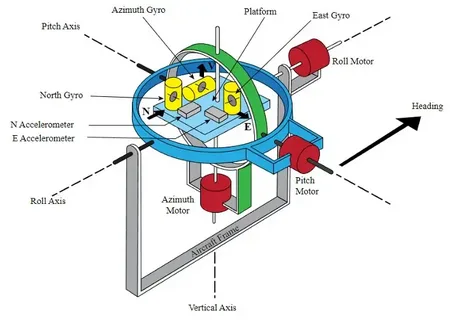
Inertial Navigation Systems (INS) are self-contained navigation units that determine position, velocity, and orientation without relying on external references like GPS. They work by using:
- Accelerometers (to measure linear acceleration)
- Gyroscopes (to measure angular velocity)
- Computational algorithms (to calculate position over time)
Traditionally, INS devices were large, expensive, and primarily used in aerospace and military applications. They offered high precision but were not practical for consumer or compact commercial use.
The emergence of MEMS technology changed this landscape entirely, enabling the development of miniature sensors that could perform similar functions at a fraction of the size and cost.
What is MEMS Technology?
Micro-Electro-Mechanical Systems (MEMS) are tiny integrated devices that combine electrical and mechanical components at the microscale. These systems are typically manufactured using semiconductor fabrication techniques similar to those used in making computer chips.
MEMS sensors can detect:
- Motion and vibration
- Pressure changes
- Orientation and rotation
- Environmental conditions
Because they are small, inexpensive, and energy-efficient, MEMS sensors are ideal for integration into portable and embedded systems.
How MEMS Technology Revolutionized Inertial Navigation Systems
The phrase How MEMS Technology Revolutionized Inertial Navigation Systems perfectly captures the shift from bulky, high-cost navigation systems to compact, affordable, and widely accessible solutions. MEMS-based accelerometers and gyroscopes replaced traditional mechanical components, making it possible to integrate INS into everyday devices.
Key improvements brought by MEMS include:
1. Miniaturization
MEMS sensors are microscopic, allowing entire inertial navigation units to fit on a single chip. This enabled INS technology to move from aircraft cockpits into smartphones, wearable devices, and drones.
2. Cost Reduction
Traditional INS systems were extremely expensive due to precision machining and calibration. MEMS manufacturing uses batch semiconductor processes, drastically reducing production costs and making inertial navigation accessible to consumer markets.
3. Power Efficiency
MEMS devices consume very little energy, which is essential for battery-powered systems like mobile phones, GPS trackers, and robotics.
4. Integration with Digital Systems
MEMS sensors easily integrate with microcontrollers and digital signal processors, enabling real-time motion tracking and navigation computations.
These advancements demonstrate clearly How MEMS Technology Revolutionized Inertial Navigation Systems, turning them into ubiquitous components of modern electronics.
Applications of MEMS-Based Inertial Navigation Systems
The impact of MEMS-based INS technology spans multiple industries:
Consumer Electronics
Smartphones use MEMS accelerometers and gyroscopes for screen rotation, gaming controls, step counting, and augmented reality applications.
Automotive Industry
Modern vehicles use MEMS-based INS for stability control, navigation assistance, and autonomous driving systems.
Aerospace and Drones
Drones rely heavily on MEMS sensors for flight stabilization, orientation, and autonomous navigation, especially when GPS signals are weak or unavailable.
Healthcare and Wearables
Fitness trackers and medical monitoring devices use MEMS sensors to track movement, posture, and physical activity.
These applications further highlight How MEMS Technology Revolutionized Inertial Navigation Systems by enabling widespread use across industries that were previously unable to afford or integrate traditional INS technology.
Advantages and Limitations of MEMS INS
Advantages
- Compact size and lightweight design
- Low manufacturing and operational cost
- High durability and shock resistance
- Easy integration with digital systems
Limitations
- Drift errors over time without correction
- Lower precision compared to high-end optical or mechanical INS
- Sensitivity to temperature and environmental noise
Despite these limitations, continuous advancements in sensor fusion and AI-based correction algorithms are improving performance significantly.
Future of MEMS in Navigation Technology
The future of inertial navigation is closely tied to further improvements in MEMS technology. Emerging trends include:
- Sensor fusion with GPS, LiDAR, and computer vision
- AI-enhanced drift correction
- Ultra-low-power MEMS for IoT devices
- Higher precision MEMS gyroscopes for autonomous systems
As these technologies evolve, the role of MEMS will continue to expand, reinforcing How MEMS Technology Revolutionized Inertial Navigation System and pushing it into even more advanced applications such as fully autonomous vehicles and space exploration systems.
Conclusion
MEMS technology has fundamentally reshaped the world of inertial navigation. By making sensors smaller, cheaper, and more efficient, it has enabled INS technology to move beyond specialized aerospace systems into everyday consumer and industrial applications. Understanding How MEMS Technology Revolutionized Inertial Navigation Systems reveals not just a technological upgrade, but a complete transformation in how machines perceive motion and orientation in the modern world.
